
What Are Grip Socks and Do You Actually Need Them?
If you've just booked your first Reformer Pilates class, chances are the confirmation email mentioned grip socks and you've been wondering whether they're actually necessary or just something studios sell at reception for an inflated price. They're necessary. Here's why, and what to look for before you buy.

What grip socks actually are
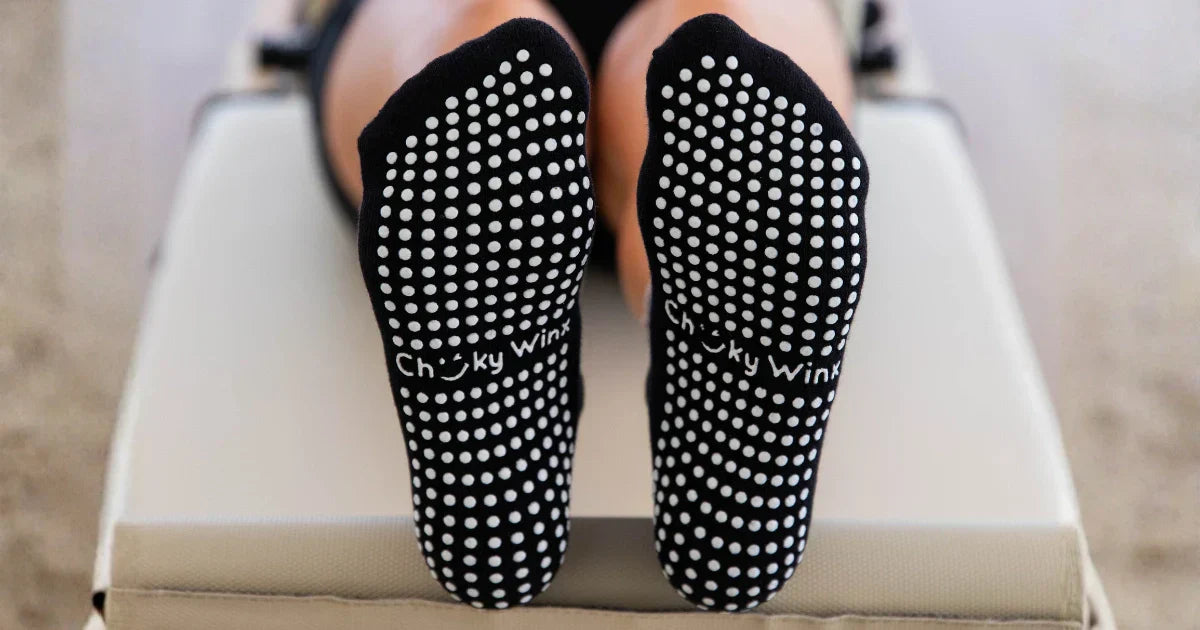
Grip socks are socks with silicone or rubber dots on the sole that create traction between your foot and the surface you're working on. The dots grip the reformer carriage, the studio floor, the mat or the footbar, which keeps your foot stable throughout the exercise rather than gradually sliding as your session goes on and your feet start to sweat.
They look like regular socks from above. The difference is entirely on the sole, and that difference matters a lot more than it sounds once you're in class trying to hold a position on a moving carriage.
Why most Reformer Pilates studios require them
It comes down to two things: safety and hygiene.
The reformer carriage is a smooth, padded, sliding surface. Bare feet on a smooth surface work fine until they get warm and sweaty, at which point the contact becomes unreliable and slipping during footwork or standing exercises is a real risk. Grip socks eliminate that variable entirely by keeping your foot anchored to the surface regardless of sweat or movement.
On the hygiene side, the reformer is shared equipment used by dozens of people in a single day. Grip socks act as a barrier between your feet and the equipment, which is why most studios treat them the same way gyms treat towels: not optional, not something the studio provides for you, something you bring yourself.
If you turn up to a Reformer class without them, most studios will either sell you a pair at reception or ask you to reschedule. It's worth sorting before you go.
What the grip dots are made from
The dots on the sole of a grip sock are typically made from silicone or rubber. Silicone dots are the most common in studio-specific grip socks because they hold their traction through repeated washing without peeling or flattening, which matters when you're washing them after every session. Rubber dots tend to degrade faster with regular washing and heat, so checking what the grip is made from before you buy is worth doing if longevity matters to you.
Full sole grip vs partial grip: why it matters
Some grip socks only have dots on the heel and toe, which sounds fine until you're doing footbar work and the middle of your foot is sliding. Full sole grip means dots cover the entire bottom of the sock, including the arch and midfoot, which keeps the whole foot stable rather than just the two ends.
Cheeky Winx grip socks have full sole grip dots, which is one of the reasons they work well for Reformer Pilates specifically where the footbar contact point changes depending on the exercise.

What to look for when you buy
There are a few things worth paying attention to that most people only figure out after buying a pair that doesn't work as well as it should.
Fit: Grip socks should fit snugly, almost like a second skin. If there's excess fabric bunching around the toes or heel, the grip dots lose full contact with the surface and the traction becomes inconsistent. If you're between sizes, go smaller rather than larger. A sock that feels slightly fitted in the shop will feel exactly right once you're moving in it.
Full sole grip: As above, make sure the dots cover the full sole rather than just the heel and toe. You can usually see this in the product photos.
Material: A cotton and spandex blend is the right combination for grip socks. Cotton keeps the sock breathable during a session and spandex gives it the stretch needed to move with your foot without losing its shape. Avoid anything that feels stiff or scratchy before washing, because it won't get better.
Style: Ankle grip socks sit just above the ankle and are the lower profile option, popular for Reformer Pilates and yoga where you want minimal coverage. Crew grip socks sit higher and are popular for barre or anyone who wants a sock that shows above their leggings. Frilly grip socks are crew height with a decorative frill at the top, which has become genuinely popular as the Pilates aesthetic has grown. All three work the same way on the sole; the choice is personal.

Are grip socks only for Pilates?
No, though Pilates is where most people encounter them for the first time. Grip socks work well for any studio-based training where you're on a smooth surface without shoes: barre, yoga, mat Pilates, reformer classes, HIIT on gym flooring and any group fitness class where bare feet or regular socks would slip. They're also widely used in hospitals and rehabilitation settings for exactly the same reason, the non-slip sole reduces fall risk on smooth ward floors.
For gym sessions involving weights and machines, grip socks work but aren't necessary in the same way they are in a studio environment. Most people who use them at the gym do so out of habit from their Pilates classes rather than because the gym requires it.
How to make them last
The most common way grip socks lose their effectiveness early is fabric softener. Fabric softener leaves a coating on the silicone dots that reduces their traction over time, and the more you use it the worse the problem gets. Wash grip socks inside out on a gentle cycle with regular detergent and air dry rather than tumble drying. The heat from a dryer can degrade the silicone and the elastic in the sock over time, and since they dry quickly anyway it's not a difficult habit to get into.

Frequently asked questions
Are grip socks mandatory for Reformer Pilates in Australia?
At most Australian studios, yes. Even studios that don't enforce a mandatory policy strongly recommend them for safety and hygiene. Turning up without them risks being turned away or having to buy a pair at reception. It's worth having your own pair before your first class.
Can I wear regular socks instead of grip socks for Pilates?
Most studios won't allow it. Regular socks have no traction on the reformer surface and become a slip risk during footwork and standing exercises as your feet warm up and sweat. Grip socks are specifically designed for this environment and can't be swapped out for regular socks.
What size grip sock should I buy?
Grip socks should fit snugly with no excess fabric bunching at the toes or heel. If you're between sizes, always go smaller. A loose grip sock loses full contact with the surface and reduces the traction the sock is designed to provide. Cheeky Winx grip socks come in three sizes: small for AU shoe sizes 5 to 7.5, medium for sizes 8 to 10, and large for sizes 10 to 12.
How often should I wash grip socks?
After every session. They've been on a shared studio surface for an hour and in contact with sweat throughout. Washing them after each use keeps them hygienic and, as long as you avoid fabric softener and high heat, they'll hold their grip through many sessions.
Do grip socks work for barre and yoga as well as Pilates?
Yes. Any studio-based training on a smooth surface benefits from grip socks in the same way. Barre studios often have their own mandatory sock policies and yoga practitioners use them for added traction on studio floors where a mat doesn't cover the full movement range.
What is the difference between ankle and crew grip socks?
The grip is the same on both. The difference is purely in the height of the sock. Ankle grip socks sit just above the ankle for a lower profile look and are the most popular for Reformer Pilates. Crew grip socks sit higher up the leg and are popular for barre and anyone who wants their socks to be visible above their leggings. Browse the full Cheeky Winx grip sock range to see all styles and sizes.
Can I wear grip socks to the gym for weight training?
Yes. They work on gym flooring and provide stability during floor-based exercises and mat work. Most people wear them to the gym as a carry-over from their studio classes rather than because the gym requires it, but there's no reason not to.
If you're heading to your first Reformer class, barre session or studio workout, grip socks are the one item worth sorting before you go. Have a look at the Cheeky Winx grip sock range and find your size and style before your next session.

Leave a comment
This site is protected by hCaptcha and the hCaptcha Privacy Policy and Terms of Service apply.